
Paradigm Shift Private Crypto Consulting
Bitcoin, Ethereum, and other Crypto’s are Revolutionizing how we Invest, Bank, and use Money. With Decades of Experience, Paradigm Shift Private Consulting can help Guide you on your way to Financial Freedom.
- Learn the tips and tricks to set up, function, and take complete control over your assets.
- Learn how to have your money work for you instead of you working for money.
- The Blockchain Is Revitalizing the World and Giving Everyone a Freedom only Dreamed Of.
There is more to Crypto and Blockchain then mere speculation and finding a bigger fool to sell to at a higher price. The Blockchain is restoring our autonomy and sovereignty. This is why you need to investigate what the Blockchain can do (utility) and how it can do it better then anything else. This gives you options you wouldn’t normally have access to with your typical bank, lender, investment provider, or other centralized system.

Online Tutoring & Mentoring
“Structured, one-on-one virtual sessions providing general education in specialized areas: corporate finance, sales optimization, paralegal methodologies, cryptocurrency trading strategies (including 2026 updates on Bitcoin L2s like Stacks and Lightning Network), blockchain fundamentals (e.g., modular designs in zkSync and Arbitrum), risk assessment, and commercial law principles. Sessions focus on historical tactics, strategies, and tools in a secure, confidential environment (educational information only; no personalized legal or financial advice).”

Freelance Legal & Finance Content Creation
“High-quality, compliance-oriented writing and content development, including white papers, regulatory overviews (updated for 2026 laws like the proposed U.S. CLARITY Act and full MiCA implementation), compliance articles, case analyses, and professional thought leadership on commercial law, trust law, UCC provisions, cryptocurrency regulations (e.g., global stablecoin mandates requiring full reserves), financial strategies, and debt-related topics. All deliverables prioritize accuracy, clarity, and adherence to applicable standards, serving as educational tools for general understanding.”

Crypto Trading
“Comprehensive mentoring on general market dynamics, technical and fundamental analysis, risk management, and historical best practices across currencies, stocks, commodities, and digital assets. As of 2026, this includes education on emerging Layer 2 solutions like MegaETH and Base for enhanced scalability, as well as trends in tokenization and AI-blockchain integration. Emphasis is placed on secure, innovative approaches to asset education, aligned with recent regulations such as the U.S. GENIUS Act for stablecoins and EU MiCA requirements; this is not investment advice, and users should seek qualified financial professionals for personal decisions.”
Mining solutions
Cryptocurrency mining is the process of validating transactions and securing blockchain networks through computational work, typically using specialized hardware and software. Miners compete to solve complex mathematical problems, adding new blocks to the chain and earning rewards in the form of newly minted coins and transaction fees.
Current Status in 2026 Mining remains viable primarily for Proof-of-Work (PoW) cryptocurrencies such as Bitcoin and Litecoin. Ethereum, however, is no longer mineable following its transition to Proof-of-Stake (PoS) in September 2022 (“The Merge”), which eliminated mining on the main Ethereum network. Participants interested in Ethereum-related rewards now focus on staking or alternative PoW chains (e.g., Ethereum Classic).
Hardware Requirements
- Bitcoin: Requires Application-Specific Integrated Circuit (ASIC) miners (e.g., Bitmain Antminer S21 series or newer models like S23 variants achieving high hashrates with efficiencies in the low teens J/TH). General-purpose computers or GPUs are no longer competitive due to network difficulty levels exceeding 125–144 trillion.
- Litecoin: Primarily uses ASICs optimized for the Scrypt algorithm, though some GPU mining persists for smaller operations.
- Other Coins: GPU or CPU mining is feasible for select lower-difficulty PoW coins (e.g., certain altcoins), but profitability is limited without low-cost electricity and scale.
Mining Software Mining software connects hardware to the blockchain network, manages operations, monitors performance, and facilitates reward distribution through mining pools. Popular options in 2026 include:
- NiceHash: User-friendly platform with automatic algorithm switching, hashpower marketplace, and easy setup for beginners and intermediate users.
- Hive OS: Cloud-based operating system for managing large-scale rigs, offering remote monitoring, overclocking, profit-switching, and centralized dashboards—widely used by professional operations.
- CGMiner: Open-source, command-line tool optimized for ASIC miners, providing granular control over hashing, fan speeds, and pool connections—preferred by advanced users.
- Other Tools: BFGMiner (for detailed ASIC/GPU control), Awesome Miner (enterprise-level management), and QuickMiner variants for streamlined operation.
Key Considerations Mining profitability in 2026 depends heavily on electricity costs (ideally below $0.05–$0.08/kWh), hardware efficiency, network difficulty adjustments, coin prices, and pool fees. Industrial-scale operations with access to renewable or low-cost energy sources dominate, while home or small-scale mining is often unprofitable for major PoW coins like Bitcoin due to high competition and energy demands.
Important Disclaimer This information is provided for general educational purposes only and does not constitute financial, investment, or technical advice. Cryptocurrency mining involves significant risks, including high energy consumption, hardware costs, regulatory uncertainties, and potential financial losses. Market conditions, difficulty levels, and profitability fluctuate rapidly. Individuals should conduct independent research, assess local regulations, and consult qualified professionals before engaging in mining activities.
How Blockchain Works
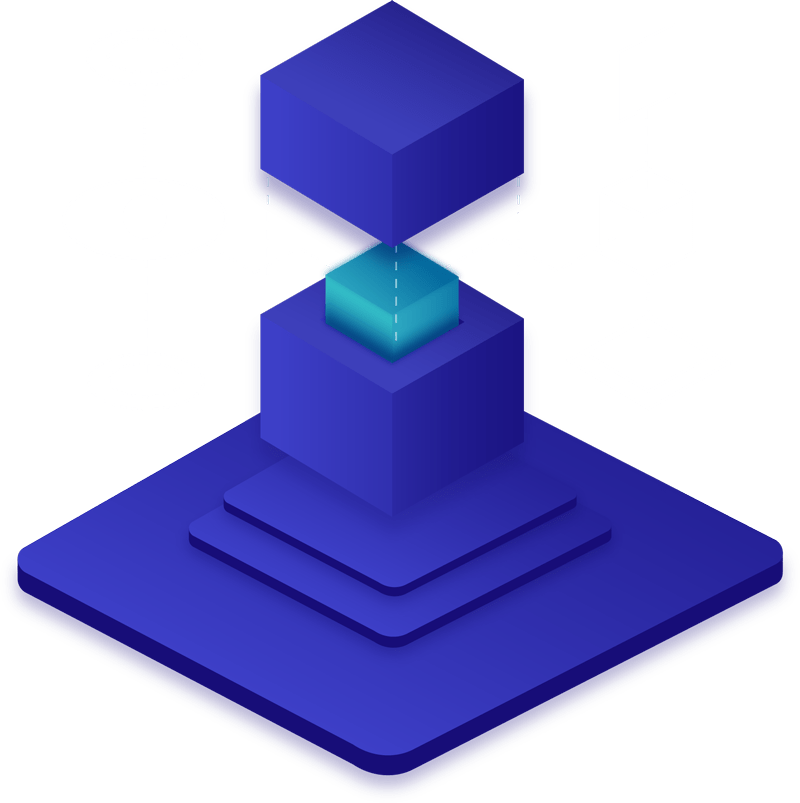
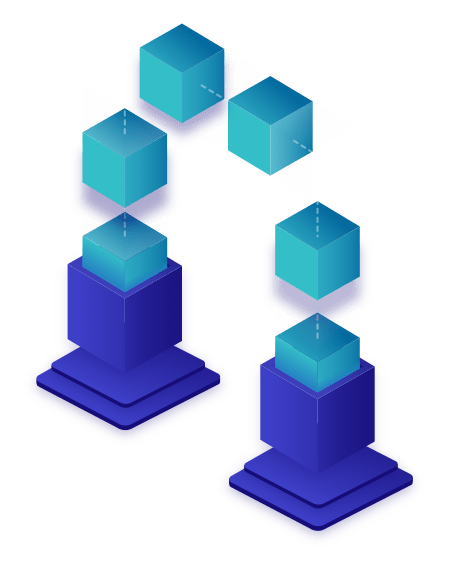
Blockchain technology is a decentralized, distributed digital ledger that securely records transactions or data across a network of computers (known as nodes). Unlike traditional centralized databases managed by a single authority, blockchain operates on a peer-to-peer network, ensuring no central entity controls the system. This design promotes transparency, security, and resistance to unauthorized alterations.
At its core, blockchain organizes data into chronological blocks that are cryptographically linked together to form a continuous chain—hence the name “blockchain.” Each block contains:
- A list of validated transactions or data entries.
- A timestamp.
- A cryptographic hash of the previous block.
- A unique hash for the current block.
Once a block is added to the chain, its contents become immutable: altering any data would require changing all subsequent blocks and achieving consensus from the majority of the network, which is computationally and practically infeasible in well-established blockchains.
Key Mechanisms
- Transaction Initiation and Propagation: A user initiates a transaction (e.g., transferring digital assets or recording data). The transaction is broadcast to the network.
- Verification and Consensus: Network nodes validate the transaction according to predefined rules (e.g., sufficient balance, valid signatures). Consensus mechanisms—such as proof-of-work (used by Bitcoin), proof-of-stake (dominant in Ethereum and many modern networks), or others—ensure agreement on the transaction’s legitimacy without relying on a trusted intermediary.
- Block Formation and Addition: Valid transactions are grouped into a block by miners or validators. The block is cryptographically secured and appended to the chain.
- Immutability and Security: The cryptographic linking of blocks, combined with decentralization, makes retroactive changes extremely difficult. This immutability provides a tamper-resistant record.
Broader Applications and Evolution Originally developed to support cryptocurrencies like Bitcoin, blockchain has expanded significantly. By 2026, it underpins diverse use cases, including:
- Fast, low-cost cross-border payments and settlements.
- Tokenization of real-world assets (e.g., real estate, securities).
- Enhanced supply-chain transparency and traceability.
- Secure data sharing in cybersecurity and healthcare.
- Decentralized finance (DeFi) protocols and smart contracts.
Modern advancements include Layer 2 scaling solutions for improved efficiency, interoperability protocols for cross-chain communication, and regulatory-compliant frameworks (e.g., enterprise-grade distributed ledger technology) that balance decentralization with institutional requirements.
Important Note This overview is provided for general educational purposes only and does not constitute technical, financial, legal, or investment advice. Blockchain systems vary in design and implementation, and participation involves risks, including technological, regulatory, and market-related uncertainties. Users should consult qualified professionals for any specific applications or decisions.
Why Invest in Crypto?
Cryptocurrencies may appeal to individuals and institutions for several general reasons, based on their underlying design and evolving ecosystem. These considerations are presented for informational and educational purposes only and do not constitute investment, financial, or other professional advice.
- Potential as a Store of Value: Certain cryptocurrencies, particularly those with fixed or algorithmically controlled supply mechanisms (e.g., Bitcoin’s 21 million coin cap), are often viewed as potential long-term stores of value. This perception stems from their decentralized nature and resistance to arbitrary inflation or censorship by central authorities. The cryptographic security of blockchain networks further enables self-custody of assets, reducing reliance on third-party intermediaries for storage and transfer.
- Utility and Practical Functionality: When a cryptocurrency provides tangible utility—such as enabling fast, low-cost cross-border payments, supporting decentralized applications, facilitating smart contracts, or powering tokenized real-world assets—demand can increase as users prefer to hold and utilize the asset rather than sell it. This utility-driven demand is amplified by network effects: greater participation enhances the protocol’s overall value and resilience.
- Increasing Institutional and Regulatory Adoption: Regulatory clarity in major jurisdictions has progressed significantly. In the European Union, the Markets in Crypto-Assets Regulation (MiCA) is fully implemented, establishing licensing requirements for issuers and service providers. In the United States, the GENIUS Act (2025) provides federal standards for stablecoins, while proposed frameworks like the CLARITY Act aim to delineate oversight between the SEC and CFTC. Globally, the ISO 20022 messaging standard—mandatory for SWIFT cross-border payments since late 2025—supports richer, more structured data exchange. This has positioned certain ISO 20022-aligned cryptocurrencies (e.g., XRP, Stellar Lumens/XLM, XDC Network, Algorand, Hedera Hashgraph/HBAR, Quant, Cardano, and IOTA) for potential integration into traditional financial systems, including faster settlements, reduced errors, and broader institutional use in payments and compliance processes.
- Broader Market and Technological Trends: Institutional participation continues to grow through vehicles such as spot exchange-traded products, corporate treasuries, and custody solutions. Technological advancements, including Layer 2 scaling, interoperability protocols, and tokenization of assets, further expand functionality and potential use cases.
Important Warnings and Considerations Cryptocurrency markets remain highly volatile and speculative. Prices can fluctuate dramatically due to macroeconomic factors, regulatory shifts, liquidity conditions, and external events. Recent periods (e.g., early 2026) have seen significant drawdowns, with substantial liquidation events (totaling billions in some sessions) and ongoing market uncertainty. The Basel Committee on Banking Supervision’s cryptoasset exposure standards, effective January 1, 2026, require banks to disclose and manage related risks, reflecting continued global scrutiny. Participation involves substantial risk of loss, and individuals should conduct independent research and consult qualified professionals before engaging with digital assets.
Fast and Global
The speed of the transaction depends on the network used. XRP, as an example, can process 1500 transactions per second with an average ledger settlement or approval time, of 3-5 seconds. This is in comparison to BTC which takes approximately 10 minutes, and Ether, which takes an average of 13 seconds. Please check the network used for specific speed of transactions.
Irreversible
Transactions on the blockchain are irreversible unless done on a centralized platform such as an exchange. If the centralized platforms authorize reversals (3rd party involved), this would be the only way transaction could be reversed. Once a transaction is verified, it gets a place in the ledger system as a block. Once it gets on the ledger, no one can delete or alter it in any way.
Secured
All blockchain transaction are secured by cryptography. Each block contains essentially a unique and private key that can be verified with a public key. If there is a change in transaction-related data, the block unique key becomes invalid. As a result, the block is discarded from the chain.
Bitcoin's True Value
Because of continued growth and adoption of Bitcoin and the blockchain, more and more are adopting the digital and secure method of the digital store of value revolution.
Crypto Wallet
There are several types of crypto wallets. There are Hot wallets, Web wallets, Mobile wallets, Cold wallets, Hardware wallets, Desktop wallets, and Paper wallets. Each carry their own safety, security, and privacy pros and cons. Hardware wallets, such as Tangem & Ledger Nano, are considered to be the safest, most secure, and private as it is not connected to (relying upon) any other application and is not connected to a connection subject to attacks.

Make Crypto Simple
Why Paradigm Shift Private Consulting?
- Cryptocurrency & Trading Education: “Comprehensive mentoring on general market dynamics, technical and fundamental analysis, risk management, and historical best practices across currencies, stocks, commodities, and digital assets. As of 2026, this includes education on emerging Layer 2 solutions like MegaETH and Base for enhanced scalability, as well as trends in tokenization and AI-blockchain integration. Emphasis is placed on secure, innovative approaches to asset education, aligned with recent regulations such as the U.S. GENIUS Act for stablecoins and EU MiCA requirements; this is not investment advice, and users should seek qualified financial professionals for personal decisions.”
- Online Tutoring & Mentoring: “Structured, one-on-one virtual sessions providing general education in specialized areas: corporate finance, sales optimization, paralegal methodologies, cryptocurrency trading strategies (including 2026 updates on Bitcoin L2s like Stacks and Lightning Network), blockchain fundamentals (e.g., modular designs in zkSync and Arbitrum), risk assessment, and commercial law principles. Sessions focus on historical tactics, strategies, and tools in a secure, confidential environment (educational information only; no personalized legal or financial advice).”
- Freelance Legal & Finance Content Creation: “High-quality, compliance-oriented writing and content development, including white papers, regulatory overviews (updated for 2026 laws like the proposed U.S. CLARITY Act and full MiCA implementation), compliance articles, case analyses, and professional thought leadership on commercial law, trust law, UCC provisions, cryptocurrency regulations (e.g., global stablecoin mandates requiring full reserves), financial strategies, and debt-related topics. All deliverables prioritize accuracy, clarity, and adherence to applicable standards, serving as educational tools for general understanding.”
Disclaimer:
We Do Not Provide Legal, Financial Or Tax Advice. Our Services Are For Private Educational Purposes Only!
Digital Currency Market Analysis
-
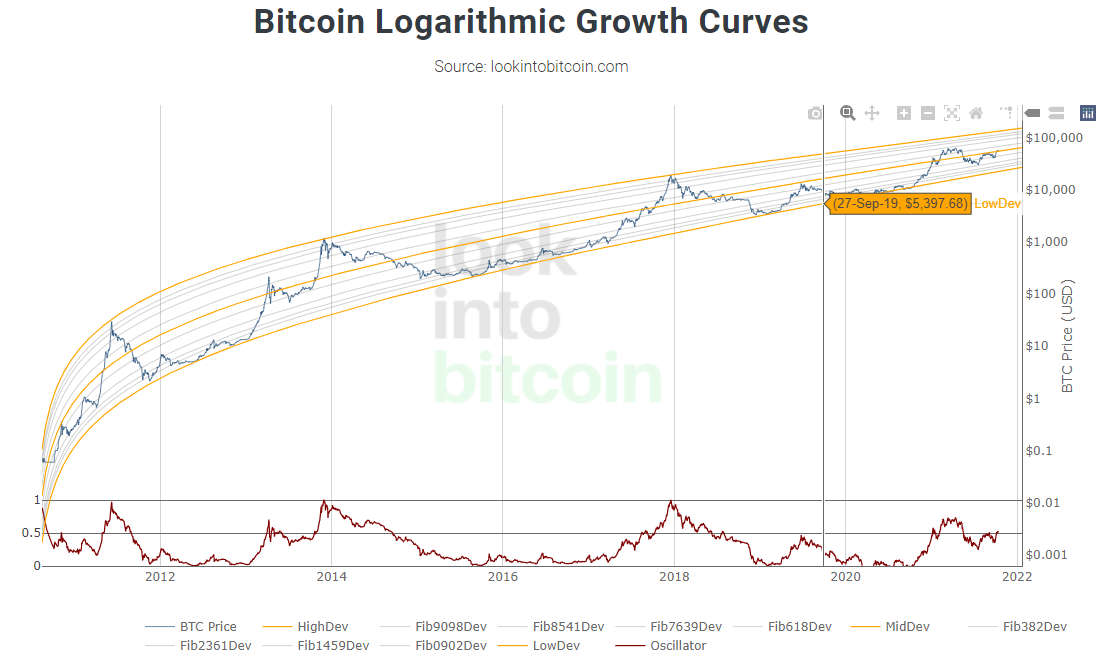
The global cryptocurrency market has experienced significant evolution since its early years. Historical data indicates that the total market capitalization reached approximately $760–$800 billion by the end of 2020. As of February 2026, the aggregate market capitalization exceeds $2.4 trillion, reflecting ongoing institutional adoption, regulatory advancements, and technological innovations such as Layer 2 scaling solutions and stablecoin expansion.
Market projections vary widely depending on scope (e.g., total capitalization vs. specific segments like exchange platforms or software services) and are subject to high volatility. Recent industry analyses estimate continued growth, with some forecasts projecting market capitalization in the tens of trillions by the early 2030s, driven by factors including tokenized assets, cross-chain interoperability, and integration with traditional finance. These figures are illustrative only and should not be interpreted as predictions or investment guidance. Cryptocurrency markets are highly speculative and can experience substantial fluctuations. Users are advised to conduct independent research and consult qualified professionals for any financial decisions.
Sources: CoinGecko, CoinMarketCap, Grand View Research, Mordor Intelligence, and IMF Crypto Assets Monitor (data as of February 2026).
Digital Currency Market Values
Cryptocurrency Valuation Fundamentals
Like traditional currencies, cryptocurrencies derive their value primarily from the interplay of supply and demand, amplified by broader market dynamics. A cryptocurrency’s price tends to increase when demand exceeds available supply, and it may decrease when supply outpaces demand. This principle remains foundational across the cryptocurrency ecosystem.
Several key factors contribute to demand and overall valuation:
- Scarcity and Supply Mechanics: Many cryptocurrencies incorporate fixed or predictable supply limits (e.g., Bitcoin’s capped total of 21 million coins). As new issuance slows or ceases, scarcity can create upward pressure on price when demand remains steady or grows. This controlled issuance, often governed by protocol rules such as halving events, enhances long-term perceived value for assets viewed as digital stores of value.
- Utility and Real-World Application: When a cryptocurrency offers practical functionality—such as facilitating payments, enabling smart contracts, supporting decentralized finance (DeFi), tokenizing real-world assets, or powering cross-border settlements—users are more inclined to hold rather than sell. Higher utility generates sustained network usage and adoption, which in turn strengthens demand. Network effects further reinforce this: as more participants (individuals, institutions, or developers) engage with the protocol, the asset’s utility and credibility increase for all users.
- Adoption and Market Sentiment: Institutional participation, regulatory developments (e.g., clearer frameworks in major jurisdictions), and macroeconomic conditions increasingly shape demand. Broader acceptance—through exchange-traded products, corporate treasuries, or global payment systems—can drive significant inflows. Market sentiment, influenced by technological advancements and external events, also plays a role in short-term fluctuations.
It is important to recognize that cryptocurrency markets are highly volatile and speculative. Prices can be affected by numerous variables beyond supply, demand, and utility, including technological upgrades, geopolitical factors, and liquidity conditions. The content presented here is for general educational purposes only and does not constitute investment, financial, or other professional advice. Individuals should conduct independent research and consult qualified professionals before making any decisions related to digital assets.
[allcurrencies]
Meet Our Team
Daniel Benham
- Certified Paralegal Blackstone 4.0 GPA
- Entered Crypto markets in 2017
- 20 Years personal currency, stocks, and blockchain trading
- 30 years corporate/finance/insurance experience
- 1997 AFIP Certification (Automotive Financial and Insurance Professionals)
Troy Danella
- Certified Systems Engineer / Architect
- 18 Years personal currency, stocks, and blockchain trading
- 30 Year IT Proffesional / Project Leader / Automation Systems
- 30 Years Programming Experience In Banking & Pharmacuticals
Subscribe To Our Newsletter For Updates & Opportunities
What Our Clients are Saying
The realization that crypto is here to stay is becoming a bigger reality sooner than later. Having additional technical, financial and experienced information from Paradigm Shift Consulting will add value to your portfolio and increase your knowledge base in the blockchain’s evolving world. I personally found value added content that was provided. Specifically technologies and security of a portfolio.
It’s my belief that others will find value add for personal crypto currency holdings and improve a knowledge base in the crypto currency’s system.
To all of our successful future!
Terry
I have been searching for an accurate way to predict market moves but never expected it to be so easy. I am forever in your debt for the charting method you expose in the trading manual. Thank You again.